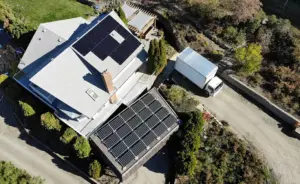
Within the first 12 months, the household saved $2,800 on electricity bills and generated 10 % more power than the original system—thanks to the higher panel efficiency and optimal tilt. The homeowner also enjoys a 25‑year performance warranty, securing the investment against degradation.
Case Study: Commercial Transformation in Tampa Bay
A 150,000 sq ft distribution center in Tampa partnered with a trusted Florida solar contractor to design a 300 kW ground‑mount system. The engineer performed a detailed load‑profile analysis, revealing that the facility’s peak demand coincided with the sun’s highest output, making a solar‑plus‑storage solution ideal.
The project secured a 30 % federal ITC, a $45,000 state rebate, and a net‑metering arrangement that credits excess energy at 1.2 × the retail rate. After 24 months, the center reported a 38 % reduction in electricity expenses, translating to $120,000 in annual savings and an estimated internal rate of return (IRR) of 14 %.
Table of Contents
- Case Study: Commercial Transformation in Tampa Bay
- Common Mistakes to Avoid When Selecting a Solar Installer
- Choosing Price Over Proven Track Record
- Neglecting Permitting and Utility Interconnection Timing
- Overlooking Future Expansion or Energy Storage
- Actionable Steps to Secure the Right Solar Partner
- Integrating Solar Education and Workforce Development
- Regional Perspective: Lessons from Other States
Common Mistakes to Avoid When Selecting a Solar Installer
Choosing Price Over Proven Track Record
Low‑ball quotes often hide sub‑par components or insufficient labor warranties. Verify that the installer is a member of the National Renewable Energy Laboratory (NREL) Certified Installer Network and can provide at least three recent references.
Neglecting Permitting and Utility Interconnection Timing
Florida utilities typically require a detailed interconnection application, and delays can add weeks to the project timeline. A reputable contractor will handle all paperwork and schedule the final inspection with the county building department, preventing costly overruns.
Overlooking Future Expansion or Energy Storage
Many residential owners later add battery storage for backup power during hurricanes. Selecting an inverter with spare capacity and a wiring design that accommodates additional modules can save thousands in retrofit costs.
Actionable Steps to Secure the Right Solar Partner
- Verify Licensing and Insurance: Ensure the company holds a Florida State Contractor’s License (Category C‑10) and carries workers’ compensation coverage.
- Request a Detailed Proposal: The document should outline system size, component specifications, performance guarantees, and a clear timeline.
- Check Warranty Terms: Look for a minimum 25‑year panel performance warranty and a 10‑year inverter warranty.
- Assess Financial Modeling: Use a calculator that incorporates ITC, local rebates, and projected utility rates to confirm the expected ROI.
- Schedule a Site Visit: A reputable installer will conduct an on‑site evaluation, discuss shading, structural constraints, and propose the most efficient layout.
Integrating Solar Education and Workforce Development
As Florida’s solar sector expands, the demand for qualified technicians grows. Programs such as the LSAT Demon Scholarships USA and Scholarships for Medical Coding and Billing USA Accredited Programs illustrate the broader trend of financial aid supporting technical education. While these scholarships target other fields, the same funding mechanisms can be leveraged for solar training programs offered by community colleges and trade schools, ensuring a pipeline of skilled installers to maintain the high standards expected from a trusted Florida solar provider.
Regional Perspective: Lessons from Other States
Looking north, the Certified Professionals required in Connecticut’s solar landscape highlight the importance of rigorous training and certification. Similarly, the Best Solar Panel Installation in Washington DC showcases how fast approval processes can accelerate project timelines when installers pre‑qualify with utilities. Florida can adopt these best practices—mandatory certification and streamlined interconnection—to further strengthen its solar market.